
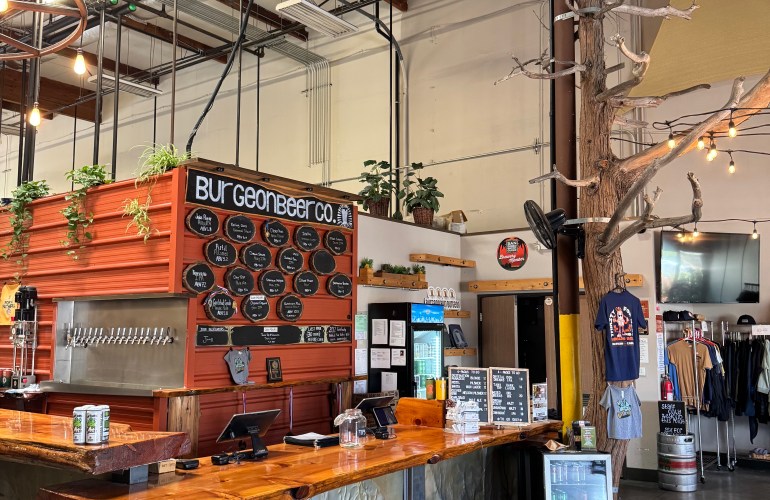
Behind every beer at Burgeon Beer Company, their team is making sure your pint isn’t polluting the planet.
“We’re the only brewery in the United States to be triple-certified in these specific certifications. We’re Climate Neutral- certified, 1% for the planet-certified, and Ocean+Positive-Certified,” said Jenna Long, Burgeon Beer Co.’s sustainability coordinator.
As Burgeon’s sustainability coordinator, Jenna Long is looking at everything from how much waste they are producing to the distance their employees commute to work at one of their four locations — three of which are in North County San Diego.
“The matter of fact is we do rely on the environment – for hops, for anything we do – in order to make good beer we need to make sure our environment is doing well,” she added.
For their 1% for the planet certification, Burgeon Beer Company donates 1% of annual sales to environmental organizations.

They were also the first brewery to earn the Ocean+Positive certification. With this one, they work with the nonprofit, Seatrees and provided funds for them to plant kelp forests in Southern California’s coastline to help pull carbon from the air.
And, for their Carbon Neutral certification, they measure their carbon footprint with a goal of creating reduction strategies to decrease their greenhouse gas emissions each year.
“For the year 2022, we emitted 844 tons of CO2 annually. For the year 2023, we were able to get down to 749 tons of CO2 emitted – that’s around 100 cars off the road for a year,” Long shared.
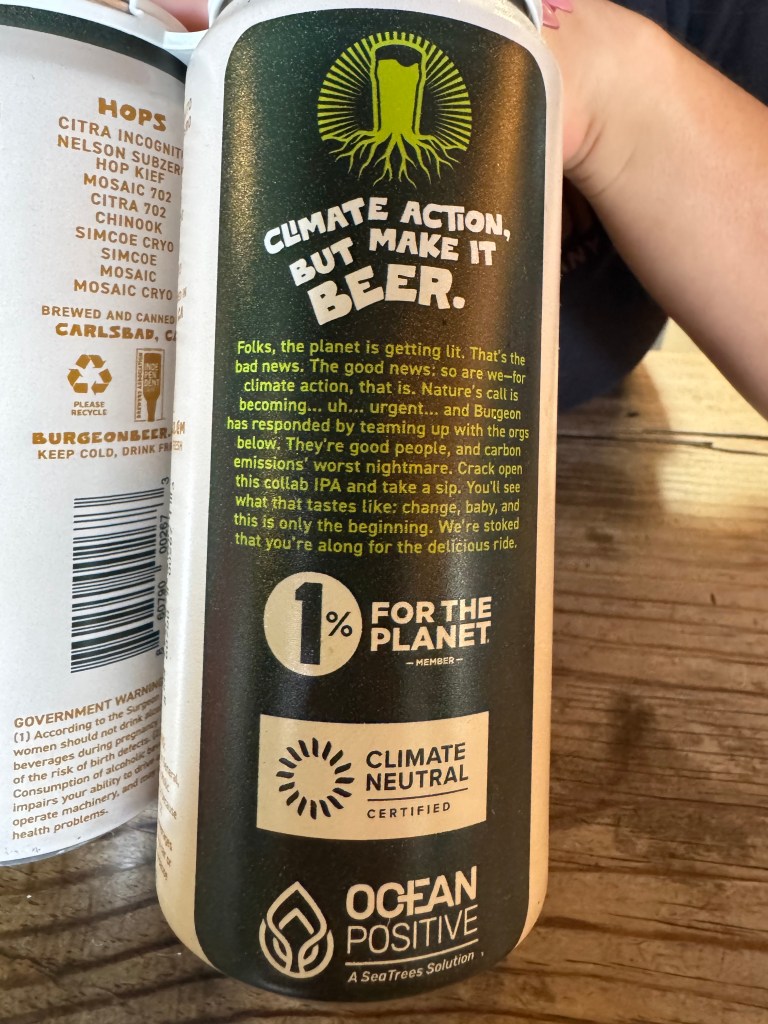
Two of their strategies were to take the wrapping off their cans and print their label directly on the can to make them 100% recyclable.
And, the other strategy was to install a pilsner grain silo. With this, a truck dumps their pilsner grain directly into the silo, instead of exporting it to them in bags. This change has led to 8,000 bags being saved from going into a landfill annually.
“I think the biggest thing is we get to show our community that we care and it’s one of those things that is a no brainer for us. We rely on agriculture and when we diminish how much water we have or our land use systems, it really suffers. There will be a time when the soil doesn’t have enough nutrients for us to have all these products,” said Long.
For businesses looking to make a sustainable change, Long says to start small. Their team got rid of coasters, for example, to cut down on extra waste. And, they send the grain they can’t use to local farms who use it for live stock feed. She also says sustainability can help save companies money in the long run.
“There’s a quote that I really like from a zero waste chef, Anne Marie Bonneau and it’s ‘we don’t need 1,000 people doing sustainability perfectly, we need millions of people acting sustainably imperfectly’,” added Long.

 hometoldwithelena.com